Health Systems Innovation Lab Hackathon · 8th edition
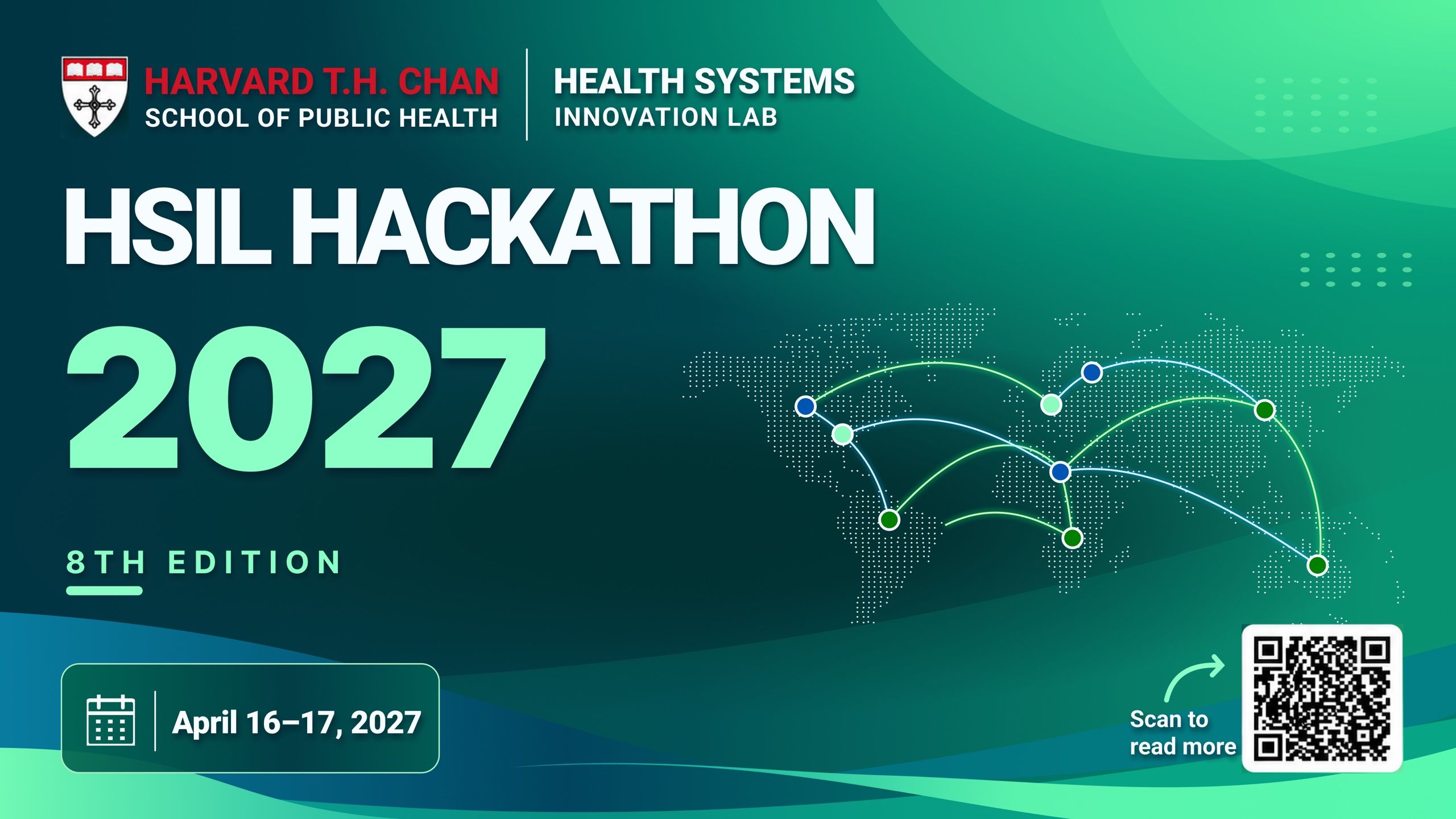
HSIL Hackathon 2027 Taiwan Hub
Two days, one team, one real problem in healthcare.
- 08:30 Check-in
- 13:30 Building starts
- 21:00 Day one ends
- 08:00 Back on site
- 13:50 First round
- 17:00 Final
- 18:50 Awards
Move across the sky to see what is happening at each hour; click to jump to that part of the programme.




In April 2027, teams around the world take on one question: how can AI help health systems care for more people with what they have? Taipei is one of the hubs.
The HSIL Hackathon is organised by the Health Systems Innovation Lab (HSIL) at the Harvard T.H. Chan School of Public Health; 2027 is its 8th edition. The Taiwan hub is organised by the Health Economics and Artificial Intelligence Lab (HEAL) at National Taiwan University’s Institute of Health Policy and Management, with the NTU College of Public Health and the NTU AI Center (AINTU) as co-organisers.
Theme for 2027
Building High-Value Health Systems: Leveraging Artificial Intelligence
There are no tracks. Clinical care, patient pathways, payment models, public health—any idea that helps a health system deliver better results with the same resources fits.
The essentials
- When
- 17–18 April 2027Saturday and Sunday. No overnight stay.
- Where
- Huashan 1914 Creative ParkZhongzheng District, Taipei. West 1 and West 4 halls.
- Who
- Anyone aged 15 or overAny field, job or level of experience. No coding needed. Under-18s need a guardian’s consent.
- Size and teams
- About 60 teams of 3 to 5An estimated 240 participants, with a dedicated table for every team. Apply with a team or on your own.
- Cost
- FreeNo fee to apply or to take part. Meals are provided. Travel and accommodation are not covered.
- Language
- Chinese or EnglishEverything can be in Chinese or English, including pitches and Q&A.
Vision and goals
We want to build a lasting base for health and medical innovation in Taiwan.
It should be a place where ideas reach the partners, expertise and resources they need to become real. From here, innovation that starts in Taiwan can reach the world—improving individual and population health, advancing clinical care, and changing how health systems respond to society’s needs.
Each year’s hackathon is the starting point for a lasting ecosystem for health innovation in Taiwan. Someone who begins with nothing but an idea should be able to find teammates to build with, mentors to consult, and the resources to test it.
Five goals for 2027
- Bring every field together
Health problems cross many fields, and any one profession sees only part of them. Whether you arrive with a problem or with skills looking for one, you can find teammates with complementary expertise to define the problem, design a solution and test it together.
- Improve ideas through expert feedback
Teams bring their idea, prototype and current hurdles to mentors from different fields, leaving with a clearer view of which assumptions to test, what the product still lacks, and what matters most next.
- Turn ideas into real applications and ventures
Teams build a prototype and get initial feedback during the hackathon. The Taiwan hub is also planning a follow-on programme, and nominated teams can go on to HSIL’s international programme through its global network.
- Help partners develop and test solutions together
Healthcare organisations bring needs from the point of care, researchers help design the evaluation, and companies bring experience in building and deploying products. When they find a shared goal, those collaborations can grow into research, joint development or real-world pilots.
- Lay the foundation for a lasting ecosystem
Through each year’s hackathon we want to connect the resources of universities, healthcare organisations, companies and founder communities, so that people with ideas can find partners at every stage.
How the two days unfold
Scroll, and time moves on.
Times are provisional. We will confirm them before the event.
See the whole timetable
- Sat 08:30 Check-in
- Sat 09:30 Opening
- Sat 10:00 Talks
- Sat 10:40–12:30 Meet people, form teams
- Sat 13:30 Building starts
- Sat 14:00–18:00 Mentor sessions
- Sat 21:00 Day one ends
- Overnight Go home and sleep
- Sun 08:00 Back on site
- Sun 08:30–11:30 Mentor sessions
- Sun 13:20 Slides due
- Sun 13:50 First round
- Sun 17:00 The final
- Sun 18:50 Awards
Sat 08:30
Check-in
Pick up your badge and meet the people around you.
Sat 09:30
Opening
This year’s theme, the rules and the safety briefing.
Sat 10:00
Talks
Partners and winning teams from the 2026 Taiwan hub share their experience. Then we introduce the mentors and explain how to book sessions.
Sat 10:40–12:30
Meet people, form teams
Get to know people from other fields first. If you came without a team, this is where you find one.
Sat 13:30
Building starts
After lunch. Every team has its own table: agree on the problem you are solving, then start on the prototype.
Sat 14:00–18:00
Mentor sessions
20-minute sessions, booked in advance. Bring the technical, regulatory or market questions you have run into.
Sat 21:00
Day one ends
We stop for the day. Go home and come back in the morning.
Overnight
Go home and sleep
Nobody stays the night. Ideas grow while you rest.
Sun 08:00
Back on site
Keep building and start shaping your pitch.
Sun 08:30–11:30
Mentor sessions
One more conversation with a mentor before judging.
Sun 13:20
Slides due
Pitch slides are due at 13:20. No changes after that.
Sun 13:50
First round
4 groups of about 15 teams run in parallel, each with 3 judges. Every team has a 10-minute slot: a 3-minute pitch followed by 5 minutes of Q&A.
Sun 17:00
The final
The top two from each group—8 teams in all—present again in front of everyone, with a 3-minute pitch and 7 minutes of Q&A scored by all judges.
Sun 18:50
Awards
The top three are announced. We finish at about 19:30.
Inside the venue
The hackathon uses two halls at Huashan 1914 Creative Park. Teams work in West 1, where the opening, the final and the awards also take place. Mentor sessions and the first round are next door in West 4.
Sat 08:30
Check-in
Check in at West 1, pick up your badge and find your team’s table.
Sat 09:30
Opening and talks
Everyone is in West 1. The opening and the talks are on the stage at one end of the hall, and each team sits at its own table.
Sat 14:00
Building and mentor sessions
Teams keep working in West 1. When your booked slot comes up, walk next door to West 4 for 20 minutes with a mentor. Sunday morning works the same way.
Sun 13:50
First round
West 4 is divided into 4 judging areas, and the 4 groups run at the same time. Teams head over when it is their turn to present while the others wait in West 1.
Sun 17:00
Final and awards
The 8 finalist teams come back to the stage in West 1 and present in front of everyone. The awards are here too.
The two halls
- West 1The main hall. Every team has its own table, and the stage is at one end. Inside, it is about 57 m long and 11.5 m wide.
- West 4Where mentor sessions and the first round take place, right beside West 1.
- Team tables
- Stage
- Where this part of the day happens
The model follows the current plan. Table positions and the distance between the two halls are indicative; the layout on the day may differ.
What the judges look for
Every hub uses HSIL’s common rubric: 10 criteria of equal weight, each scored 0 to 2. Here is what earns the full 2 points on each.
20points in total10 criteria × 2 points each
The 8 finalists are announced after the first round and the top three after the final. Every participant gets the rubric before the event.
- Problem definition and solutionThe problem is defined, measured and framed effectively.
- Value proposition and innovationA clearly innovative solution with a compelling, unique value proposition.
- OpportunityA clearly defined target market, with evidence of need or an attempt to validate it.
- Competitive landscapeA clear understanding of the competition, with strong positioning and differentiation.
- Business modelA clear, viable and potentially scalable business model.
- Go-to-market strategyA clear, actionable plan to reach users, matched to the value proposition and business model.
- The askA compelling understanding of funding needs, milestones and terms.
- TeamA strong team with complementary skills and clear roles.
- PresentationClear, confident and compelling.
- Q&AQuestions are answered, and the answers are compelling.
From Taipei to Boston
The Taiwan hackathon is the first stop. Its top three teams are nominated for HSIL’s international programme, and the Taiwan hub is planning a follow-on programme of its own.
Taiwan hub
- From December 2026Applications and selection
Apply through HSIL’s central application system and choose the Taiwan hub, as a team or on your own. Each member fills in their own application. Eligible teams with complete applications are accepted in the order they finish applying, so apply early. Applications tentatively close in late January 2027.
- March 2027Pre-event meet-upProvisional
Optional. Meet other participants and, if you have no team yet, find teammates. Date to be announced.
- 17–18 AprilTaiwan hackathon
Two days in person at Huashan 1914 Creative Park. The hub picks its top three teams.
- After the hackathonTaiwan follow-on programmeIn planning
The Taiwan hub is planning its own programme to help promising teams understand how their solution would be used, validate the need with users, and improve it from their feedback. Details and dates are still being finalised and will be announced here.
HSIL global programme
- 19–30 AprilBootcamp I
The Taiwan hub nominates its top three teams for HSIL’s virtual bootcamp.
- 3–14 MayBootcamp II
HSIL selects teams from Bootcamp I.
- 24 May – 18 JuneVenture Building Immersion
Teams turn their idea into a launch-ready plan.
- 29 SeptemberDemo Day
The last stop: the global finalists present in person in Boston.
The Taiwan hub nominates its top three teams for Bootcamp I; HSIL selects teams at every later stage. The Bootcamps and Immersion are entirely virtual; teams generally pay their own travel to Boston.
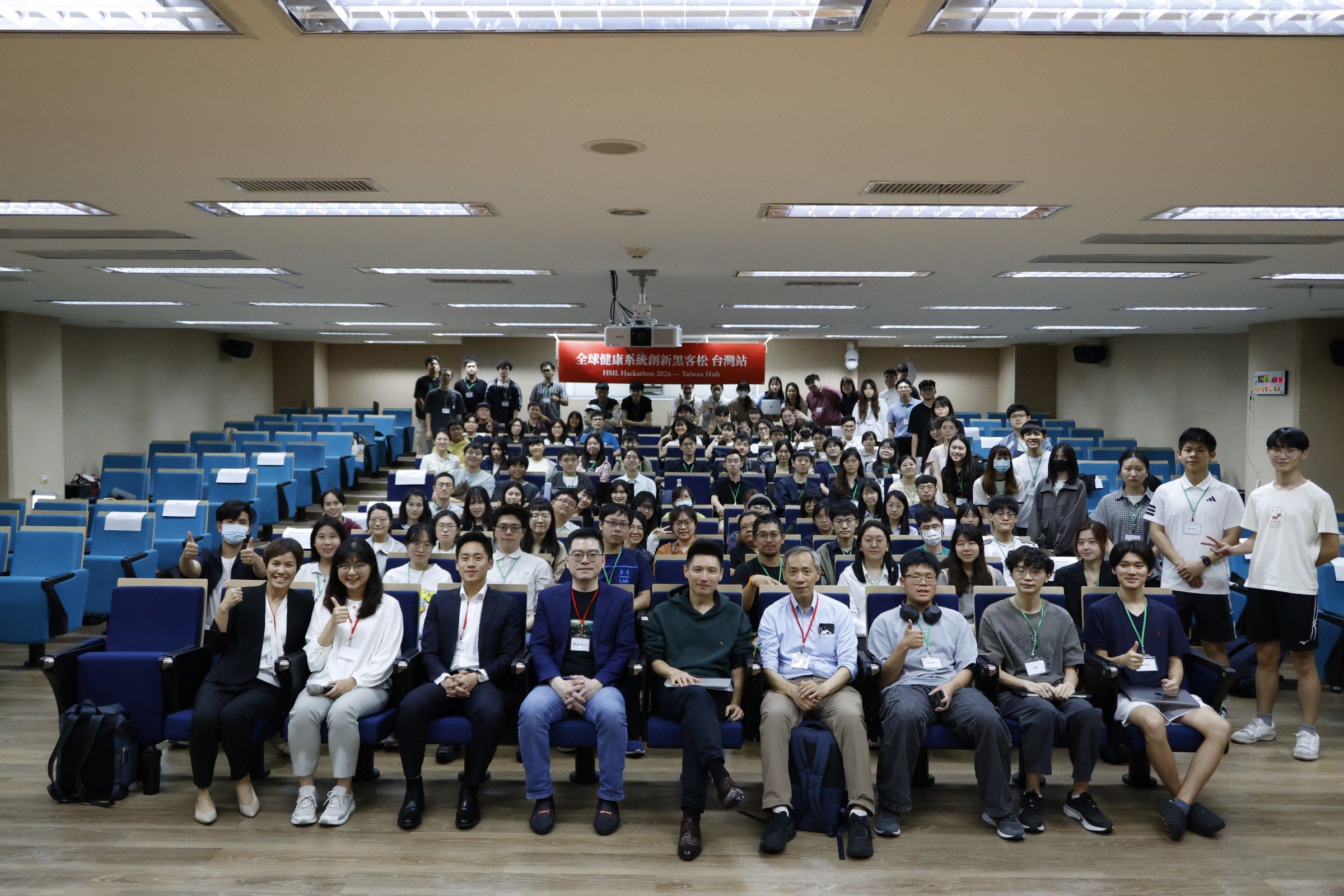
In 2026, Taiwan held its first HSIL Hackathon
10–11 April 2026, NTU College of Public Health. The top two teams both reached HSIL’s Bootcamp II (50 teams worldwide), and the winner, PhenoCDS, went on to Demo Day as one of 20 global finalists.
- participants
- 132
- teams
- 31
- applicants
- 149
2026 winners
- FirstPhenoCDSAI clinical decision support that helps doctors spot rare diseases early.
- SecondICBigBossAn eye-health tool that tracks visual fatigue and gives personalised advice.
- ThirdThe HealthorithmAn AI companion that helps people with chronic conditions take their medication on time.
The team
The Taiwan hub is run by an organising team of eight at NTU. Here is who looks after what.
Arthur C. Kuo
Event Director and Taiwan Hub Lead
Sets goals and timelines and coordinates the leads. Works with HSIL and the university, plans the programme and the judging, and invites mentors and judges. He also led the first Taiwan hub in 2026.
LinkedInAlice Jo Wei Wu
Deputy Director, Sponsorship and Partnerships Lead
Takes part in planning and decisions, leads sponsor outreach, and looks after relations with the co-organisers and other partners.
LinkedInFreddy Lin
Technical Operations Lead
Manages the network, power and audio-visual equipment at the venue.
LinkedInMilly Hsieh
Administration Lead
Handles administration, recruits the event crew, organises shifts and rosters, and tracks working hours.
Benson Chien
Finance Lead
Prepares the budget, tracks spending, income and payments, reviews expenses, and closes the accounts after the event.
LinkedInRoley Huang
Marketing and Recruitment Lead
Plans recruitment and publicity, and leads photography and coverage of the event.
LinkedInShiuan-Yu Chen
Event Operations Lead
Coordinates the venue and suppliers, arranges crew and shifts on site, and oversees event execution, safety and contingencies.
LinkedInJamie Cheng
Participant Communications Lead
Manages applications and the participant list, sends notices and answers questions, and handles certificates and feedback.
LinkedIn
Assoc. Prof. John Tayu Lee
Faculty Advisor
Associate Professor at the Institute of Health Policy and Management, National Taiwan University, and a Yushan Young Scholar of Taiwan’s Ministry of Education. Before returning to Taiwan, he researched and taught health economics and policy at Imperial College London, the National University of Singapore, the University of Melbourne and the Australian National University. He is an associate editor of npj Digital Public Health and BMJ Global Health, and founded the Taiwan hub with the team in 2026.
Questions
Other questions about applying or taking part: hsilhackathon.taiwan@gmail.com
How do I apply?
Applications open in December 2026, and the Taiwan hub tentatively closes them in late January 2027. Exact dates will be announced. Apply through HSIL’s central application system and choose the Taiwan hub. If you already have a team, each member still fills in their own application. The link will be posted here and on Instagram. After you apply, you will receive an automatic confirmation email; selection results will be sent separately on a date to be announced.
Who can apply?
Anyone aged 15 or over, from any field, job or level of experience. You don’t need to code. Under-18s need a guardian’s consent. Students, clinicians and public health workers, engineers, designers, researchers and founders are all welcome.
How are teams selected?
The venue holds about 60 teams, an estimated 240 people. The organisers review every application. Eligible teams with complete applications are accepted in the order in which their last member applied, so apply early.
Can I apply without a team?
Yes. We hold 8 team places for people who apply on their own, and help them form teams. You can also find teammates at the pre-event meet-up in March (provisional) and in the session on Saturday morning for meeting people and forming teams. Teams have 3 to 5 people.
Can I join if I don’t code?
Yes. Judges look at how well you understand the problem and whether the solution can work in practice. Teams need people from different backgrounds, and you don’t need a fully working product.
Does it cost anything?
No. Applying and taking part are free, and meals are provided. Travel and accommodation are not covered.
Do I have to stay overnight?
No. The event runs over two days: Saturday until 21:00, and Sunday until about 19:30. You go home on Saturday evening and come back on Sunday morning.
Can we use real patient data?
Only public or de-identified data. Do not bring records that could identify anyone. Teams choose their own tools and platforms.
Does each team get its own mentor?
No. Mentors are not attached to teams. Each team can book one 20-minute session on Saturday afternoon and one on Sunday morning to discuss technical, regulatory or market questions. Most mentors are working professionals in fields such as technology, business and law. The idea and its direction stay the team’s own.
Who owns what we build?
Your team does, and HSIL takes no equity. If team members already have intellectual property obligations to an employer, university or sponsor, those still apply.
What happens after the hackathon?
Two things. The Taiwan hub nominates its top three teams for HSIL’s Bootcamp I, and HSIL selects teams at each later stage. The Taiwan hub is also planning a follow-on programme of its own, to help promising teams validate user needs and refine their solution from feedback. Details and dates are still being finalised and will be announced here.
Want to take part?
Applications open in December 2026. Eligible teams are accepted in the order they finish applying, so get ready early.
Partner, mentor or judge
If your organisation would like to partner with the Taiwan hub, or you’d like to mentor or judge, write to us.